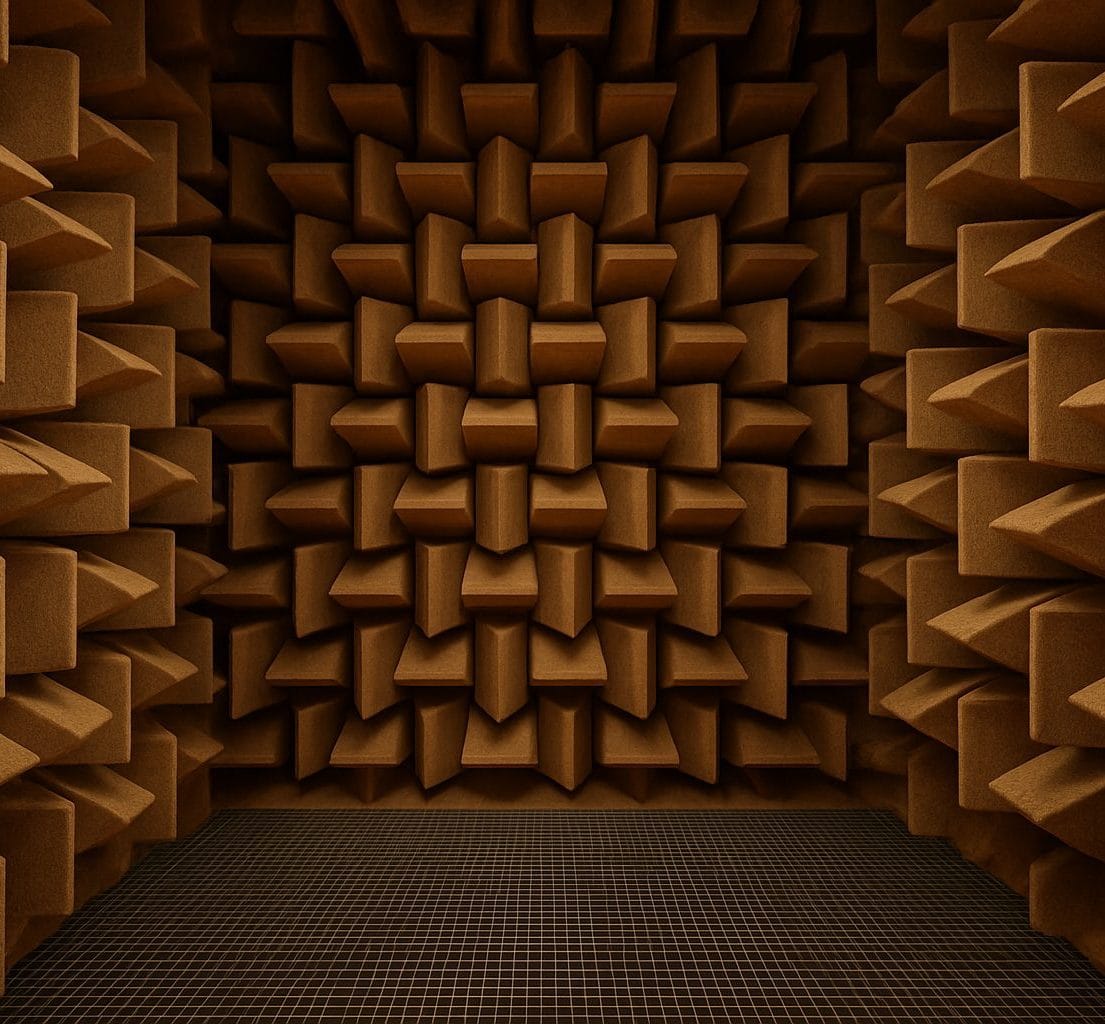
The Noise Reduction Coefficient (NRC) is a critical metric used to evaluate the sound absorption performance of acoustic materials. Represented on a scale from 0 to 1, the NRC rating indicates how much sound a material absorbs. For example, an NRC rating of 0.8 means the material absorbs 80% of sound waves, significantly reducing noise and echo within a space¹.

What Are NRC Sound Ratings?
Acoustic foam panels with high NRC ratings are particularly effective in improving sound clarity, making them essential in environments such as recording studios, offices, and auditoriums.

How NRC Ratings Are Calculated
The NRC rating of a material is determined through standardized tests that measure sound absorption at specific frequencies: 250 Hz, 500 Hz, 1000 Hz, and 2000 Hz. These frequencies represent a range of common sounds, from low-frequency hums to high-pitched ambient noise. The average of these absorption coefficients forms the NRC rating.
Foam panels made from materials like melamine foam, such as Basotect, achieve high NRC ratings due to their open-cell structure, which efficiently traps and dissipates sound waves².

Why NRC Ratings Matter
Sound Absorption Efficiency
High NRC-rated foam panels provide superior sound absorption, reducing reverberation and improving acoustic balance in a room.
Targeted Frequency Control
Different applications require materials that absorb specific frequencies. NRC ratings help identify the right material for controlling low, mid, or high frequencies.
Environmental Considerations
Low VOC foam panels with high NRC ratings align with sustainable building practices, ensuring both performance and environmental responsibility³.
Key Benefits of High NRC Acoustic Foam Panels
Enhanced Sound Clarity
Panels with high NRC ratings minimize noise and echo, making them ideal for recording studios, home theaters, and performance spaces.
Improved Privacy
In offices and residential spaces, NRC-rated panels reduce sound transmission, ensuring privacy and comfort.
Aesthetic Versatility
Foam panels come in various designs and colors, combining functionality with aesthetic appeal.
Fire Resistance and Durability
Many NRC-rated panels, such as those made from melamine foam, offer fire resistance and long-lasting performance, ensuring safety and reliability in diverse applications⁴.

NRC sound ratings are a vital tool for understanding the performance of acoustic foam panels, offering insights into their sound absorption capabilities across various frequencies. By prioritizing materials with high NRC ratings, such as melamine foam, architects and designers can create acoustically balanced spaces that are both functional and sustainable. Whether for studios, offices, or public buildings, NRC-rated panels ensure improved sound quality, reduced noise, and enhanced comfort.
References
Acoustic Geometry. (2022). Understanding NRC Ratings for Acoustic Panels. Retrieved from https://www.acousticgeometry.com
BASF. (2023). Basotect Melamine Foam for Acoustic Applications. Retrieved from https://www.basotect.com
Knauf Insulation. (2023). Sustainable Acoustic Solutions with High NRC Ratings. Retrieved from https://www.knaufinsulation.com
Auralex Acoustics. (2023). Acoustic Foam Panels for Soundproofing Efficiency. Retrieved from https://www.auralex.com
U.S. Green Building Council. (2023). Low VOC Acoustic Panels for Green Building Standards. Retrieved from https://www.usgbc.org
Share