
Melamine foam is a high-performance material widely used for its superior sound absorption capabilities. Its open-cell structure traps sound waves, converting their energy into heat and significantly reducing noise levels. Unlike traditional soundproofing materials that block sound transmission, melamine foam minimizes reverberation and echoes, improving sound clarity within a space¹.
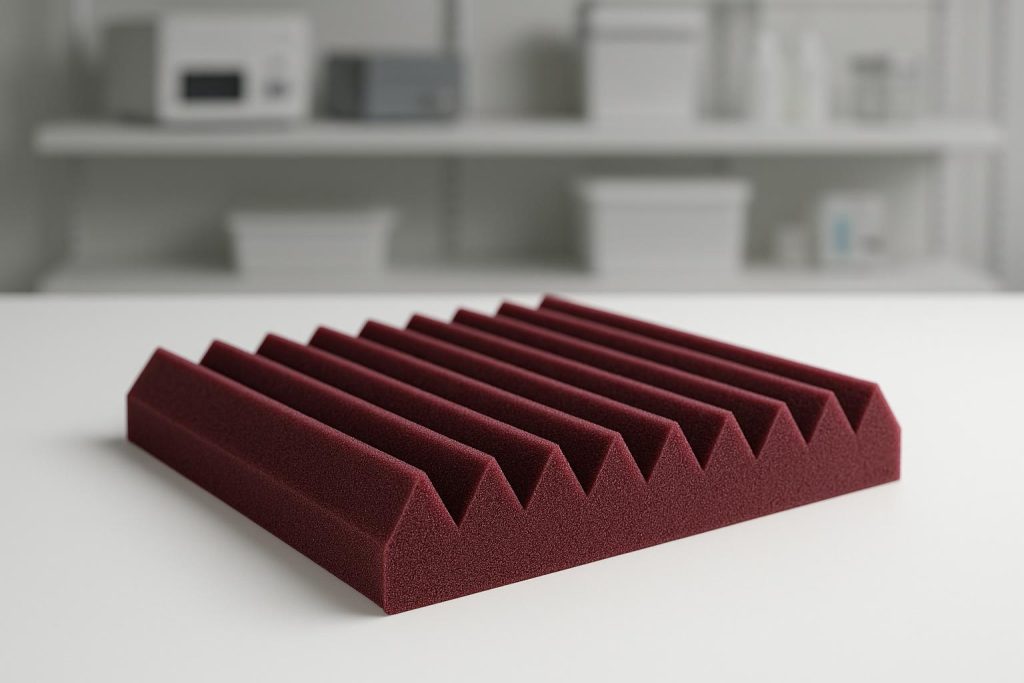
How Melamine Foam Absorbs Sound
This unique property makes melamine foam an essential component in environments requiring precise acoustic control, including recording studios, offices, transportation systems, and public spaces.

Why NRC Ratings Matter for Melamine Foam
The Noise Reduction Coefficient (NRC) is the key metric used to evaluate the sound absorption performance of materials. Rated on a scale from 0 to 1, an NRC of 0.85 indicates that the material absorbs 85% of sound waves. Melamine foam, such as Basotect, consistently achieves high NRC ratings, making it ideal for spaces that demand effective noise control².
NRC ratings account for sound absorption across various frequencies, including low, mid, and high ranges. Melamine foam performs particularly well in mid-to-high frequencies, which are often the most disruptive in indoor environments.

Key Benefits of Melamine Foam for Noise Control
Effective Noise Reduction
Melamine foam’s ability to absorb sound waves across a wide range of frequencies ensures reduced background noise and improved sound clarity.
Fire Retardant Properties
As a naturally fire-resistant material, melamine foam meets stringent safety standards, making it suitable for public buildings, transportation systems, and industrial facilities.
Sustainability
Melamine foam is a low VOC material, contributing to healthier indoor air quality while aligning with green building certifications. Its recyclability further enhances its environmental appeal³.
Lightweight and Versatile
The lightweight nature of melamine foam allows for easy installation on walls, ceilings, and other surfaces, providing flexible acoustic solutions for various settings.
Applications of Melamine Foam in Noise Control
Recording Studios and Theaters
Melamine foam ensures precise sound capture and playback by eliminating echoes and reverberation.
Commercial and Office Spaces
Acoustic foam panels made from melamine are used to reduce noise distractions, improving productivity and communication.
Transportation Systems
Trains, airplanes, and ships rely on melamine foam to minimize engine noise and enhance passenger comfort.
Public Buildings
Auditoriums, hospitals, and airports benefit from the foam’s dual properties of sound absorption and fire resistance⁴.
Residential Spaces
In homes, melamine foam enhances privacy and reduces noise between rooms, creating a quieter and more comfortable environment.

Melamine foam stands out as a premier material for noise control, combining superior sound absorption properties with sustainability and safety. Its high NRC ratings, fire resistance, and versatility make it a go-to choice for a range of applications, from studios and theaters to public buildings and transportation. As the demand for eco-friendly and effective acoustic solutions continues to grow, melamine foam remains at the forefront, offering long-lasting performance and aligning with modern sustainability standards.
References
BASF. (2023). Basotect Melamine Foam for Acoustic Applications. Retrieved from https://www.basotect.com
Acoustic Geometry. (2022). NRC Ratings and Sound Absorption Properties. Retrieved from https://www.acousticgeometry.com
U.S. Green Building Council. (2023). Sustainable Acoustic Materials for Green Buildings. Retrieved from https://www.usgbc.org
Knauf Insulation. (2023). Fire-Resistant and Sustainable Acoustic Solutions. Retrieved from https://www.knaufinsulation.com
Auralex Acoustics. (2023). Acoustic Foam Panels for Noise Control. Retrieved from https://www.auralex.com
Share