
Acoustic foam plays a vital role in managing sound in various environments by reducing noise and improving sound clarity. Unlike conventional soundproofing materials that block sound transmission, acoustic foam absorbs sound waves, preventing them from reflecting off surfaces and causing echoes. The foam’s open-cell structure allows it to trap and dissipate sound energy effectively, making it a staple in environments requiring controlled acoustics, such as studios, offices, and auditoriums¹.

The Science Behind Acoustic Foam
One of the key metrics for evaluating the effectiveness of acoustic foam is its Noise Reduction Coefficient (NRC) rating. A high NRC rating signifies that the foam absorbs a substantial portion of sound waves, ensuring reduced reverberation and enhanced clarity.

How Acoustic Foam Reduces Noise
Acoustic foam primarily works by converting sound energy into heat energy through friction as sound waves pass through its porous structure. This process is particularly effective at controlling mid-to-high-frequency sounds, which are often the most disruptive in indoor environments.
Foam thickness, density, and surface design significantly influence its noise reduction capabilities. For example, melamine foam, like Basotect, is widely used for its high NRC rating, lightweight nature, and fire-retardant properties. Its versatility makes it suitable for various applications, including acoustic ceilings, walls, and specialized studio setups².
Applications of Acoustic Foam in Soundproofing
Acoustic Studio Foam
Recording studios use foam to eliminate echo and reverberation, ensuring precise sound capture for audio production.
Acoustic Ceiling Foam
In office and commercial settings, ceiling-mounted foam reduces ambient noise, creating a more productive and comfortable environment.
Soundproofing Foam Panels for Walls
Foam panels installed on walls effectively minimize noise transmission between rooms, making them ideal for residential and commercial soundproofing.
Fire Retardant Acoustic Foam
In spaces with stringent fire safety requirements, foam made from fire-retardant materials like melamine ensures both sound control and safety compliance³.
Benefits of Using Acoustic Foam
Noise Reduction
Acoustic foam significantly reduces echoes and background noise, enhancing sound quality in treated spaces.
Improved Clarity
By absorbing sound waves, the foam ensures clearer speech and audio playback, making it invaluable in recording and broadcasting.
Sustainability
Modern acoustic foams often incorporate low VOC materials and recycled content, promoting eco-friendly building practices.
Versatility
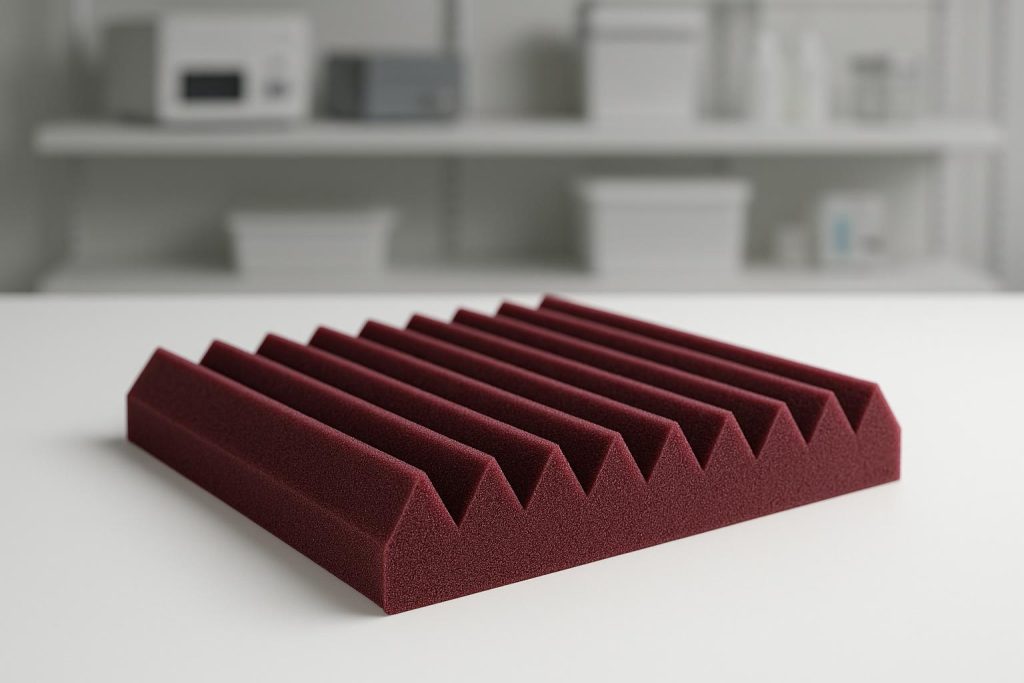
Acoustic foam is available in various designs, including wedges, pyramids, and flat panels, catering to both functional and aesthetic needs⁴.

Acoustic foam remains a cornerstone of effective soundproofing, offering versatile applications across residential, commercial, and industrial spaces. Its ability to absorb sound waves and reduce noise pollution makes it indispensable for creating acoustically balanced environments. With advancements in sustainable materials like low VOC foam and innovations such as IoT-enabled panels, acoustic foam continues to evolve, meeting modern demands for functionality, safety, and environmental responsibility. By understanding its role and leveraging its benefits, architects and designers can craft spaces that are both serene and sustainable, enhancing overall comfort and sound quality.
References
Acoustic Geometry. (2022). How Acoustic Foam Works. Retrieved from https://www.acousticgeometry.com
Basotect by BASF. (2023). Melamine Foam for Acoustic Solutions. Retrieved from https://www.basotect.com
Auralex Acoustics. (2023). Studio Acoustic Foam Panels. Retrieved from https://www.auralex.com
Knauf Insulation. (2023). Sustainable Materials in Acoustic Foam Design. Retrieved from https://www.knaufinsulation.com
U.S. Green Building Council. (2023). Acoustic Foam and Sustainable Building Practices. Retrieved from https://www.usgbc.org
Share